Tag Archives: Berlin

NOTES OF AN AMATEUR FARMER

Last May, we presented the first steps of our urban agriculture project in Kalasatama – the ‘bagfarm’ organised by Dodo and put together by a group of about 30 farmers.

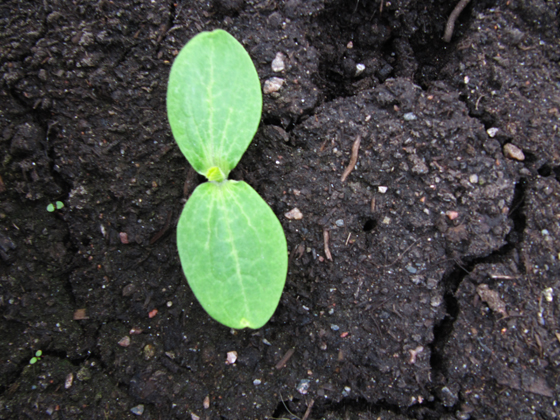
In the heat of last summer, our farm was proved very fertile, despite the windy weather and occasional problems with water supply. The Urban Dream Management team being amateur farmers with little previous experience, we were satisfied with this year’s crop. And after the first summer’s experience, we also got some useful knowledge of how to prepare for next year and which plants to choose. Altogether, farming in the city turned out mostly a pleasure. Most of all, the huge yield of self-grown zucchini we grew from merely two small seeds, was a miracle for a first-time farmer, and well worth the little effort. (more…)

Posted in Co-creation, Kalasatama Temporary, Slow + Sustainable, Unfinished City | Also tagged | 1 Comment

A DECADE OF URBAN DREAMS

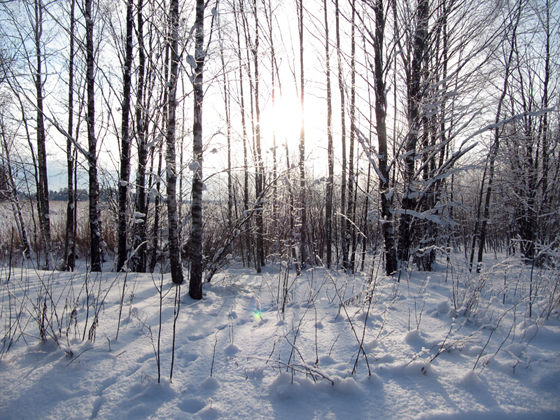
IMG_8003APUrban Dream Management has been taking a long winter nap, travelling around and creating visions for the new decade. In Helsinki, we have been enjoying the most beautiful and rare winter wonderland since ages, which also sets a totally new scene for urban experiences and winter perspectives from the sea ice.

At Urban Dream Management, our expectations are high for the new decade to show even brighter lights for new visions in urban development to gain a foothold. We are anticipating the emergence of even more inspiring, meaningful, lively and open environments, in the spirit of urban everyman’s right and participation in the city.

To open up the scene for new dashing ideas, let’s just give a moment to contemplate on a few projects we wanted to pick from the last decade. This is a very unofficial and subjective selection of 5 projects or places worthy of mentioning, due to their pioneering spirit, innovative approach or revealing nature.

BADESCHIFF, BERLIN

badeschiff-yöpanorama-cropWhile the idea of open-air swimming in Helsinki is now tempting only for courageous ice-swimmers, we can nostalgise over sunny days and warm nights at the Badeshiff, which has over several years become one of our favourite spots in Berlin.

Badeschiff, the “Bathing ship”, is a floating swimming pool constructed into the frame of an old river cargo boat. The project by AMP Arquitectos with architect Gil Wilk and artist Susanne Lorenz was started in 2004, originally as a mobile pool for a 4-month period, but then gained a 5-year permission to stay as a public swimming pool by the Arena in Berlin Treptow. The pool has become a popular hotspot and a complex with dj’s, clubs and movies: a place in a cool industrial setting by the river that offers different experiences for day and night, summer and winter. Now its temporary permission has been extended with another 5 years, up until 2014. Therefore, Badeschiff is a good example of how a temporary project can evolve into a more permanent phenomenon: in this case, the popularity of the place has been the motor. To some, the crowds may also be the only downside of the place.

DSCN5538

GECEKONDU, AMSTERDAM

62_03-a

Photo: Dus Architects

During the summer 2009, our Dutch friends, the DUS Architects, developed an ingenious sort of a nomadic guerrilla building. The Gecekondu was built from the archetypical nomadic bags, the so-called china bags, filled with sand from the beach. It was constantly dismantled and reconstructed in different locations, travelling from the Almere beach to Arcam Island in Amsterdam. The creature borrowed its name from the Turkish word ‘Gecekundu’, literally meaning ‘built in one night’.

The Gecekondu was at the same time a mobile building, an informal hotel, a statement, and a very successful public place that gathered numerous people for lectures, discussions, music, films, bar, and children’s events. No wonder that the building had its share of uninvited sleep-in guests and a visit by the authorities as well…

The purpose of the Gecekondu, according to DUS, was “to jointly investigate and question temporary spontaneous use, the claiming of spaces, bottom up versus top down, nomadic life, the effects of migration onto towns and the potential of the exisiting townscape. Or shortly: To test the borders of the Dutch planning system and to have sheer summer fun“.

The baghouse was recently also nominated as “Best architecture project of the year 2009” by the Dutch magazine NRC. Thumbs up for DUS!

Gecekondu-w

photo: Dus Architects

DODO’s URBAN GARDENS, HELSINKI

dodo-w

photo: globaalipiknik.wordpress.com

The Finnish Dodo organisation opened a new page in the history of urban farming in Helsinki last year with its well-organised guerrilla garden next to the railways in Pasila. The project was part of Dodo’s theme “Global Picnic – Cities and Food” for the year 2009. As Dodo states, Helsinki has long traditions in growing household vegetables both in people’s own gardens and the municipal allotments. At the moment, however, the demand for land to plant your own vegetables, is way higher that the supply. The Pasila project proved that it is possible to grow clean food even in urban centres. Urban gardening is also a great way to utilise many unused in-between spots of the cities, where each cubic centimetre is valuable space. Not to mention that gardening offers a good chance of doing-together and enjoying nature even in urban areas.

Last week Dodo was also nominated the Finnish Architects Association’s yearly ‘Tunnustuspaanu’ award for its endeavors to promote urban participation and sustainable development. We are eager to see what kind of ideas and projects the year 2010 has to offer.

BAUSPIELPLATZ KOLLE 37, BERLIN

IMG_5191AIMG_5193A Last August, on a walk in Prenzlauer Berg, Berlin, I happened to walk past an enchanting place. An unusual kind of playground filled with the strangest wooden constructions, huts, bridges, staircases, theatre stages. A playground that offered surprises and set the imagination running free without boring toys for predetermined uses.

The ‘Abenteurliche Bauspielplatz Kolle 37‘ is an ‘adventurous building playground’ on Kollwitz Straße, Berlin. It offers a free-of-charge supervised building workshop for children and numerous other cultural events.

The history of Kolle 37 goes back to 1979, when a group called ‘Spielwagen Berlin’ was founded. Its mission was to view the city as playground, enhance free play and creativity and devote time for children. The idea of a supervised ‘bauspielplatz’ started already in mid-1980s but became reality in early 1990s. According to the main philosophy of Kolle 37, children are treated as equal partners, not objects of education. They are able to play free and learn their boundaries and responsibilities under a flexible guidance.

It is easy to imagine that in this kind of place, even adults may learn and feed their imagination just as much as the children. Who knows, it might also invite the hidden child in any grown up person to come play and create.

POST-INDUSTRIAL SPACES IN HELSINKI

IMG_5844A

The Hietalahti Shipyard

Our last mention is not a project, but rather a potential not to be missed. Since the industrial harbours of Helsinki have been moved to north-eastern district of Vuosaari, several post-industrial places around the city centre are now waiting for the emergence of new uses. The old central railway tunnel, the shipyard of Hernesaari, the Jätkäsaari harbour and the eastern harbour of Kalasatama, open up a new layer of the city that has been hidden from the public so far. The scale of these industrial sites is important even on the international level, and their atmosphere as such is inspiring. Before the new plans for these areas come into existence, the places may offer a platform for active and persistent urban inhabitants to pursue new ideas, if they so wish. Of course, much depends on the attitude of municipal authorities and landowners. Now that Helsinki is preparing for the coming year 2012 as the World Design Capital, let us hope that the city’s strategy recognises the already-existing qualities of the city’s industrial past and the potentials these spaces offer. They possess the potential for the creation of new, open and unconventional places in the city – if not spoiled with dull and safe standard solutions. Our desire is to see the future design capital as an open city that recognizes the voices of its inhabitants.

060505 019

The Helsinki Railway Tunnel in 2006

With these ideas in mind, Urban Dream Management is ready to set the wheels in motion for 2010 and invites you to join in!

Posted in Co-creation, Rethinking Design, Slow + Sustainable, Unfinished City | Also tagged , | Comments closed

POSTCARDS FROM POST-EAST #3

IMG_6502W

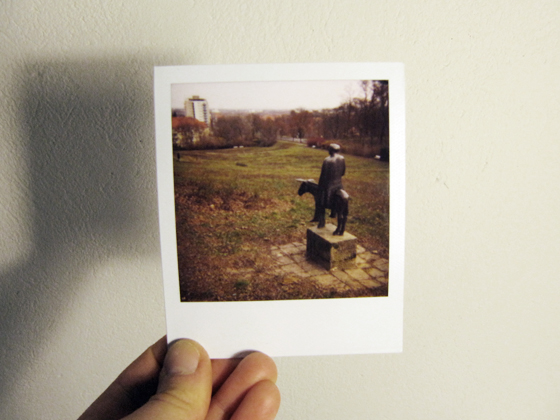
Polaroid from Ben

Eisenhüttenstadt, 21 November 2009,

I went to Eisenhüttenstadt once again this weekend but didn’t get a chance to see more than the incredibly vast reaches of the brand new paper mill that flanks the railroad from Frankfurt an der Oder. However, there was another interesting perception unintentionally resuming a thought that arose Thursday night in a Berlin-Friedrichshain café. A young woman, aged 24, and me discussed whether there is a particular East-German (maybe: Post East) condition, still differing from a general western way of perception, values and behavior. (more…)

Posted in Postcards from Post-East | Also tagged | Leave a comment

POSTCARDS FROM POST-EAST

stamp-w1

Urban Dream Management presents a new series of postcard-based blogging.

In this series, German blogger Ben Kaden depicts moments and changing scenes from places that used to belong to East German territory, and which 20 years ago shifted from the socialist East block to the Western market economy – yet at the same time dismissing its main aspects of culture and society for one that is in many angles diametrically opposed. This change led to a condition of being in-between, of permanent departure and rare arrival. Large parts of the east are still framed by transition.

(more…)

Posted in News, Postcards from Post-East, Unfinished City | Also tagged | 3 Comments

FUEL FOR THOUGHT

IMG_5297AIMG_5298ADuring one afternoon walk in Prenzlauer Berg, Berlin, I ran across an old gas station that has been turned into art space. A perfect example of the surprises Berlin has to offer for an occasional urban drifter, but also a worldwide organisation with locations also in cities like Miami, Kaufdorf and Copenhagen. That is, the FIT – Freie Internationale Tankstelle. (more…)

Posted in Unfinished City | Tagged | Leave a comment